Table of Contents
- Introduction
- Historical Context
- Common Ground
- Understanding Differences
- What Islam Teaches About Christians
- What Christians Should Know About Muslims
- Building Relationships
- Current Initiatives in Oklahoma
- Addressing Misconceptions
- Moving Forward Together
Introduction {#introduction}
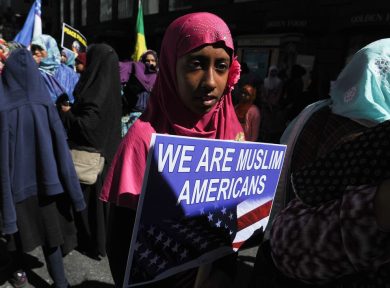
Oklahoma is a state where faiths meet. Drive through Oklahoma City or Tulsa, and you’ll see churches on nearly every corner. And increasingly, you’ll also see mosques—from the Islamic Society of Greater Oklahoma City to the Islamic Society of Tulsa, from the mosque in Norman near OU to communities of faith gathering in Stillwater, Edmond, and smaller towns across the Sooner State.
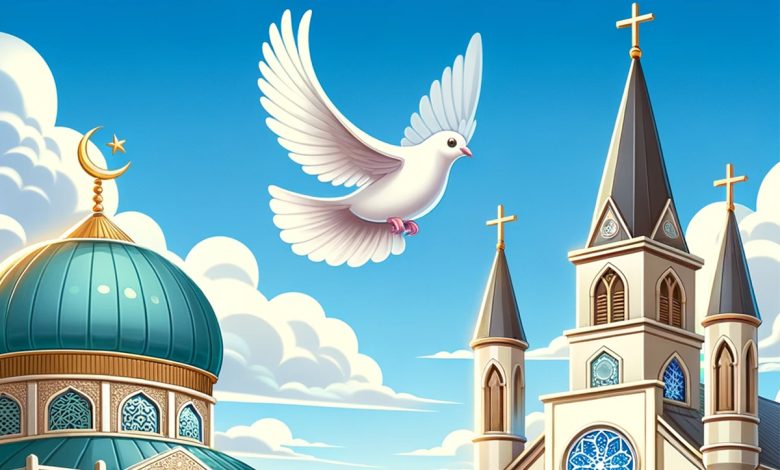
These two great monotheistic faiths—Islam and Christianity—share the same land, the same communities, and increasingly, the same neighborhoods.
The question isn’t whether we’ll coexist. We already do. The real question is: Will we coexist with understanding, respect, and genuine relationship? Or will we remain strangers, defined by stereotypes and suspicion?
This article is written for both Muslims and Christians in Oklahoma who want the first option. It’s for those who believe that faith is strongest not when it’s defended against others, but when it’s lived with integrity and shared with respect.
Oklahoma has an opportunity—and a responsibility—to model what interfaith dialogue and community can look like in modern America.
Historical Context {#history}
Muslims and Christians: 1,400 Years of Coexistence
People often assume Muslims and Christians are natural enemies. This misunderstands history.
The historical reality: For most of Islamic history, Muslims and Christians have coexisted—sometimes peacefully, sometimes in conflict (like many religions throughout history). But coexistence was far more common than conflict.
Early Islamic History
When Islam began in 7th-century Arabia, Christians already lived in the region. Some became Muslim; many remained Christian. The Quran itself mentions Christians respectfully:
“And We sent, following in their footsteps, Jesus, son of Mary, confirming that which was before him in the Torah; and We gave him the Gospel, in which was guidance and light…” (Quran 5:46)
Early Muslim rulers established contracts with Christian communities (like the “Covenant of Umar”) that guaranteed:
- Religious freedom for Christians
- Protection of churches
- Safety to practice faith openly
- Exemption from military service (in exchange for tax)
While not perfect, this model allowed diverse religious communities to flourish alongside each other for centuries.
Christian and Muslim Scholars Working Together
In medieval Islamic Spain (Al-Andalus), Christians, Muslims, and Jews lived in remarkable proximity:
- Scholars of different faiths studied together
- Philosophers debated openly
- Science and mathematics advanced through cooperation
- Translation projects preserved ancient knowledge for all humanity
This period (9th-13th centuries) is called “Convivencia” (coexistence) and represents Muslims, Christians, and Jews at their scholarly best.
Crusades and Conflicts
Yes, there were religious conflicts—including the Crusades. But historians note:
- Wars were often political and economic, not purely religious
- Christian kingdoms fought Christian kingdoms
- Muslim leaders fought Muslim leaders
- Religion was sometimes used to justify what were fundamentally power struggles
The point: History shows both conflict and cooperation. Neither is inevitable. Both are possible depending on choices humans make.
Modern Context
In modern times, Muslims and Christians:
- Work together in hospitals and schools
- Fight together for justice and human rights
- Support each other during tragedies
- Raise families in the same neighborhoods
- Build friendships across faith lines
Billions of Muslims and Christians live in peace globally. Oklahoma is simply continuing this long tradition.
Common Ground {#common-ground}
Before discussing differences, let’s acknowledge what Muslims and Christians share.
Shared Beliefs
One God:
- Both Muslims and Christians are monotheists
- We believe in one God (Allah in Arabic; God in English)
- We reject polytheism and idol worship
- We see God as all-powerful, all-knowing, merciful
Divine Revelation:
- Both believe God communicated with humanity through prophets
- Both revere Abraham, Moses, and other biblical figures
- Both believe God gave divine guidance to humanity
- Both read and study scripture as revelation
Moral Values:
- Both emphasize justice, mercy, and compassion
- Both teach caring for the poor and vulnerable
- Both value family and community
- Both oppose theft, murder, false testimony
- Both teach sexual ethics and modesty
- Both emphasize prayer and remembrance of God
The Golden Rule:
- Jesus taught: “Do to others as you would have them do to you”
- Islam teaches: “None of you truly believes until he loves for his brother what he loves for himself”
- The principle is identical: treat others with the kindness you’d want for yourself
Social Justice:
- Both traditions call for care of widows, orphans, and the poor
- Both call for justice for the oppressed
- Both teach that faith without works is hollow
- Both demand integrity and honesty in business and dealings
Eschatology (End Times):
- Both believe in divine judgment after death
- Both believe in heaven and hell
- Both teach that actions have consequences
- Both teach that God is ultimately in control of destiny
Shared Values in Daily Life
Family:
- Both prioritize family as central unit
- Both value parents and intergenerational connection
- Both teach children religious values
- Both see family as path to righteousness
Education:
- Both traditions have historically emphasized learning
- Both see knowledge as good and encouraged
- Both have contributed great scholars and thinkers
- Both support education as path to opportunity
Charity and Service:
- Both teach giving to those in need
- Both organize community service
- Both believe helping others is spiritual practice
- Both see generosity as virtue
Community:
- Both gather regularly for worship and community
- Both celebrate together during holidays
- Both support each other through life transitions
- Both believe in collective responsibility
Integrity:
- Both teach honesty in all dealings
- Both prohibit lying and deception
- Both teach keeping promises and covenants
- Both value trustworthiness
Understanding Differences {#differences}
Key Theological Differences
To build real bridges, we must understand what separates us—not with hostility, but with clarity.
The Nature of God:
Christian belief:
- The Trinity: God is one being in three persons (Father, Son, Holy Spirit)
- Jesus is God incarnate—God became human
- God’s nature is both transcendent and personal
Islamic belief:
- Absolute monotheism (Tawheed): God is one, unique, without partners
- Jesus was a human prophet, not God
- God is transcendent and beyond human comprehension
- God has no equal or comparison
Why it matters: Christians see God’s love expressed through Jesus’s sacrifice. Muslims see God’s mercy and justice expressed through revelation and guidance. These are genuinely different theological positions.
The Authority of Scripture:
Christian belief:
- The Bible (Old and New Testaments) is sacred scripture
- The New Testament is authoritative for Christian doctrine
- The Bible records God’s full revelation through Jesus
Islamic belief:
- The Quran is God’s literal, preserved word
- The Hadith (sayings of Prophet Muhammad) provide guidance
- The Bible is respected but Muslims believe it’s been altered over time
- Muslims don’t believe Jesus was crucified or resurrected (core Christian doctrine)
Why it matters: Christians and Muslims read different scriptures and reach different conclusions. This is foundational to each faith’s identity.
The Concept of Salvation:
Christian belief:
- Salvation comes through faith in Jesus Christ
- Jesus’s death and resurrection atoned for humanity’s sins
- Grace (God’s unearned favor) is central
- Belief in Jesus is necessary for salvation
Islamic belief:
- Salvation comes through submission to Allah and righteous deeds
- All sincere believers in previous revelations can achieve salvation
- There is no original sin requiring sacrifice
- Repentance and good works are paths to God’s mercy
Why it matters: This is perhaps the most central difference. How one achieves salvation is the heart of religious practice.
Jesus’s Role:
Christian belief:
- Jesus is the Son of God
- Jesus is God (part of the Trinity)
- Jesus came to save humanity through his death and resurrection
- Jesus is divine and human
Islamic belief:
- Jesus (Isa) was one of the greatest prophets
- Jesus was born of a virgin (honored in Islam)
- Jesus was not God’s son, but God’s servant and messenger
- Jesus will return before the Day of Judgment
- Jesus was not crucified (another was made to appear as Jesus)
Why it matters: Christianity centers on Jesus as Savior. Islam honors Jesus as prophet but denies his divinity. Both traditions deeply respect Jesus, but understand his role fundamentally differently.
These Differences Are Real
I say this clearly: These differences are not trivial. They’re not just different cultural expressions of the same thing. Muslims and Christians have genuinely different understandings of:
- Who God is
- What scripture is authoritative
- Who Jesus was
- How salvation works
- The nature of revelation
And that’s okay. Deep differences don’t require animosity. They require:
- Honest acknowledgment
- Respectful engagement
- Willingness to learn
- Commitment to coexistence despite disagreement
What Islam Teaches About Christians {#islam-teaches}
Islamic Teachings on “People of the Book”
The Quran specifically addresses Christians (and Jews), often calling them “Ahl al-Kitab” (People of the Book).
Islamic Respect for Christians:
“Those who have believed and those who were Jews and Christians and Sabeans – those [among them] who believed in Allah and the Last Day and did righteousness – will have their reward with their Lord, and no fear will there be concerning them, nor will they grieve.” (Quran 2:62)
This verse clearly states that righteous Christians and Jews have nothing to fear from Allah’s judgment.
Interfaith Marriage:
“This day [all] good foods have been made lawful, and the food of those who were given the Scripture is lawful for you and your food is lawful for them. And [lawful in marriage are] chaste women from among the believers and chaste women from among those who were given the Scripture before you…” (Quran 5:5)
The Quran permits Muslim men to marry Christian women—an extraordinary level of acceptance for the 7th century.
Religious Freedom:
“There is no compulsion in religion. The right direction is henceforth distinct from error.” (Quran 2:256)
Islam teaches that faith must be voluntary, not coerced. This applies to Christians and all religions.
Respect for Jesus:
The Quran mentions Jesus (Isa) more often than Muhammad. Jesus is:
- Called “a sign for the worlds” (21:91)
- Described as “strengthened by the Holy Spirit” (5:110)
- Given honor as one of the five greatest prophets
- Honored for his miracles and wisdom
Respect for Christians’ Piety:
“Among the People of the Scripture is a community of good character. They recite the verses of Allah during the night while they prostrate [in prayer]. They believe in Allah and the Last Day, and they enjoin what is good and forbid what is evil, and they race to do good deeds. And those are among the righteous.” (Quran 3:113-114)
The Quran acknowledges that many Christians are righteous, pious people.
What Islamic Tradition Teaches
Islamic scholarship, developed over 1,400 years, includes nuanced teachings about Christians:
Shared Prophetic Tradition:
- Muslims believe Abraham was an ancestor of both Jewish and Christian traditions
- Muslims honor the prophets that Christians honor
- Muslims see themselves in continuity with previous revelations (even while disagreeing on details)
Permissible Interaction:
- Islamic law permits Muslims to live peacefully with non-Muslims
- Business dealings with Christians and others are permitted
- Greetings and social courtesy are taught
- In many Islamic countries, Christians held important positions in government and society
Charitable Obligations:
- Islamic charity (Zakat) can go to poor people regardless of faith
- Acts of kindness are encouraged toward all humans
- Caring for sick neighbors includes Christian neighbors
- Helping in community is not limited by faith
Protection of Churches:
- Islamic law prohibits destroying houses of worship
- Christian churches are protected under Islamic jurisprudence
- Interfering with Christian worship is prohibited
- There’s a principle: “The monks’ monasteries are their mosques”
What This Means for Oklahoma
In Oklahoma, Islamic teachings clearly support:
- Peaceful coexistence with Christians
- Respect for Christian faith and practice
- Cooperation in community service
- Honest business dealings
- Neighborly kindness and support
- Protection of churches and Christian institutions
A Muslim in Oklahoma acting with hostility toward Christians or Christianity would be acting against Islamic teachings.
What Christians Should Know About Muslims {#christians-know}
Common Misconceptions to Correct
Misconception 1: “Muslims worship a different God”
Reality: Muslims worship the God of Abraham, the same God that Christians and Jews worship. The Arabic word “Allah” simply means “God.” Arabic Christians use the word “Allah” for God. Muslims believe in the God described in the Hebrew Bible.
The Quran says: “Our God and your God is One.” (Quran 29:46)
Misconception 2: “Islam teaches violence”
Reality: The word “Islam” comes from “Salam,” meaning peace. The greeting is “As-salamu alaykum” (Peace be upon you). The Islamic principle of Jihad means “struggle”—primarily the internal struggle to become a better person. While Islam permits defensive war (like Christianity does), the mainstream Islamic teaching emphasizes peace.
Like Christianity, Islam’s core teaches love, mercy, and justice. Extremists misrepresent Islam just as extremist Christians don’t represent authentic Christianity.
Misconception 3: “Muslims don’t respect Jesus”
Reality: Islam teaches tremendous respect for Jesus. Muslims:
- Believe Jesus was born of a virgin
- Believe Jesus performed miracles
- Believe Jesus was one of the greatest prophets
- Believe Jesus will return before the Day of Judgment
- Teach that insulting Jesus is serious
Muslims disagree with Christian theology about Jesus (that he’s God’s son or part of the Trinity), but this disagreement doesn’t negate respect for Jesus as a figure.
Misconception 4: “All Muslims are Arab”
Reality: Most Muslims are not Arab. The largest Muslim populations are in:
- Indonesia (Southeast Asia)
- Pakistan (South Asia)
- Bangladesh (South Asia)
- Nigeria (West Africa)
- Turkey (Western Asia)
- Iran (Western Asia)
Only about 15% of Muslims are Arab. Islam is a truly global religion. In Oklahoma, you’ll meet Muslims from dozens of countries.
Misconception 5: “Islam oppresses women”
Reality: This is complex. Islam grants women significant rights:
- Women can own property and conduct business
- Women must consent to marriage
- Women can divorce
- Women inherit (though at a different rate than men in classical law)
- Women are obligated to seek education
- The Prophet’s first wife, Khadijah, was a successful businesswoman
However, cultural practices in some Muslim-majority countries do restrict women’s rights. This reflects cultural tradition, not necessarily Islamic teaching. Similarly, Christianity was used to justify denying women’s rights, but that doesn’t mean Christianity teaches oppression.
Like all religions, Islam’s teachings must be distinguished from cultural practices in particular countries.
Misconception 6: “Muslims practice ‘taqiyya’ (lying)”
Reality: Taqiyya is a Shia Islamic concept permitting lying to protect one’s life in extreme persecution. Sunni Islam, which includes most Muslims, does not permit taqiyya. And even among Shias, it’s only permitted in extreme circumstances.
Mainstream Islamic teaching emphasizes honesty. Lying is considered a serious sin. Muslims should not be assumed to be lying when living peaceful lives in free countries.
What Makes Muslims Muslim
Five Pillars:
- Shahadah – Declaration that there’s no god but Allah and Muhammad is His messenger
- Salah – Prayer five times daily
- Zakat – Charitable giving (2.5% of wealth annually)
- Sawm – Fasting during Ramadan
- Hajj – Pilgrimage to Mecca (once in lifetime if able)
Core Beliefs (Six Articles of Faith):
- Belief in Allah
- Belief in Angels
- Belief in Divine Books (previous scriptures)
- Belief in Prophets
- Belief in the Day of Judgment
- Belief in Divine Decree
Islamic Values:
- Justice and fairness
- Mercy and compassion
- Honesty and integrity
- Humility and respect
- Family and community
- Knowledge and learning
- Responsibility and accountability
The Diversity of Islam
Muslims are diverse:
- Different ethnic backgrounds
- Different schools of Islamic thought (Sunni, Shia, etc.)
- Different levels of religious practice
- Different interpretations of Islamic teachings
- Different political views
Just as Christianity has Catholics, Protestants, Evangelicals, Orthodox, and others—each with different practices and beliefs—Islam has significant diversity.
Never assume all Muslims think or practice identically. Meet individual Muslims as individuals.
Building Relationships {#building-relationships}
Starting Simple: Community Connection
Attend Interfaith Events:
- Many Oklahoma cities host interfaith panels and dialogues
- Attend as a learner, not a debater
- Listen more than you speak
- Ask genuine questions
Invite a Muslim Colleague to Lunch:
- Simple human connection often precedes theological dialogue
- Ask about their faith, their family, their life
- Share about yours
- Build friendship first
Visit Each Other’s Places of Worship:
For Christians visiting a mosque:
- Call ahead to ask about visiting
- Most mosques welcome visitors
- Remove shoes before entering prayer areas
- Women may need to cover hair in prayer areas (many mosques provide scarves)
- Observe, don’t participate in prayer (unless invited by the imam)
- Ask questions after, not during worship
For Muslims visiting a church:
- Call ahead to understand what to expect
- Participate in ways you’re comfortable
- You’re welcome to stand during singing but don’t have to
- Observe communion from the pew if not invited to participate
- Most churches welcome visitors warmly
Shared Meals:
- Muslims fast during Ramadan (daylight hours); invite them to Iftar (breaking the fast)
- Many Muslims eat halal (similar to kosher)
- Many Muslim-friendly restaurants exist in Oklahoma
- Sharing meals builds genuine connection
Deeper Engagement: Dialogue and Learning
Interfaith Study Circles:
- Some Oklahoma churches and mosques host joint study groups
- Learn about each other’s texts and traditions
- Discuss similarities and differences respectfully
- Build genuine understanding
Joint Community Service:
- Partner on food banks or homeless services
- Volunteer together at hospitals
- Work together on interfaith disaster relief
- Serve together in the community
Educational Presentations:
- Invite a Muslim speaker to your church about Islam
- Invite a Christian speaker to your mosque about Christianity
- Host Q&A sessions
- Build knowledge and address misconceptions
Family Connections:
- Friendships across faith lines often deepen into family connections
- Your children can have Muslim friends
- Celebrate each other’s holidays
- Share in life’s important moments
What Good Interfaith Dialogue Looks Like
It’s Honest:
- You don’t pretend differences don’t exist
- You acknowledge real theological disagreements
- You’re authentic about what you believe
- You don’t water down your faith to make others comfortable
It’s Respectful:
- You listen to understand, not to argue
- You acknowledge the other person’s sincere faith
- You don’t mock or demean
- You defend your beliefs without attacking theirs
It’s Humble:
- You admit you don’t know everything
- You’re willing to learn
- You recognize your own tradition’s failures
- You acknowledge common humanity
It’s Focused on Shared Values:
- You emphasize common moral ground
- You work together on shared concerns
- You see opportunities for cooperation
- You build on what unites while acknowledging differences
It’s Long-term:
- One conversation doesn’t solve everything
- Relationships deepen over time
- You keep showing up
- You build trust gradually
Current Initiatives in Oklahoma {#oklahoma-initiatives}
Existing Interfaith Work
CAIR Oklahoma:
- Council on American-Islamic Relations
- Works on civil rights and community education
- Hosts interfaith events
- Website: cairoklahoma.com
Oklahoma Interfaith Alliance:
- Coalition of religious leaders
- Works on community issues
- Hosts dialogue events
- Check their website for events
University Programs:
- OU, OSU, UCO host interfaith events
- Student-led interfaith groups
- Academic study of religion
- Interfaith student organizations
Mosque Open Houses:
- Many Oklahoma mosques host open house events
- Invite community members to learn about Islam
- Answer questions
- Build relationships
- Contact local mosques about participation
Church-Mosque Partnerships:
- Some Oklahoma churches have formal relationships with mosques
- Joint service projects
- Educational exchanges
- Mutual support
How to Get Involved
Contact CAIR Oklahoma:
- Ask about interfaith opportunities
- Participate in events they host
- Join their mailing list
- Contribute to their work
Connect with Your Local Mosque or Church:
- Ask if they have interfaith initiatives
- Offer to participate or help organize
- Propose joint projects
- Build relationships with leadership
Start Your Own Initiative:
- If nothing exists, create it
- Invite a Christian leader and a Muslim leader to coffee
- Propose regular dialogue meetings
- Work together to organize community events
Support Muslim Rights:
- If mosques face discrimination or harassment, speak up
- Support religious freedom protections
- Stand with Muslims when they’re targeted
- Use your privilege to amplify marginalized voices
Addressing Misconceptions {#misconceptions}
Common Interfaith Tensions and How to Address Them
Tension 1: “The Crusades/Colonial History”
Context:
- Christians sometimes had guilt about Crusades
- Muslims sometimes carry hurt from historical Christian actions
- Colonialism often involved Christian powers
How to Address:
- Acknowledge historical wrongs honestly
- Don’t defend past actions
- Recognize suffering on both sides
- Commit to better future
- Learn history together
Tension 2: “Current Middle East Conflicts”
Context:
- Israeli-Palestinian conflict involves religious dimensions
- Some see it as Christian vs. Muslim (it’s not—it’s primarily political)
- Media coverage is often biased
- People have strong feelings
How to Address:
- Separate religious faith from political conflicts
- Acknowledge legitimate concerns on both sides
- Don’t make one person responsible for distant conflicts
- Focus on local cooperation and peace
- Support peace efforts globally
Tension 3: “Conversions and Proselytizing”
Context:
- Some Christians actively try to convert Muslims
- Some Muslims see this as disrespectful
- Some Muslims do invite non-Muslims to Islam
- There’s tension about respectful boundaries
How to Address:
- Discuss boundaries upfront in interfaith relationships
- Respect each person’s right to their faith
- Distinguish between living your faith authentically and aggressive proselytizing
- Accept that people might try to invite you to their faith
- Maintain friendships across these differences
Tension 4: “Islamophobia vs. Legitimate Criticism”
Context:
- After 9/11, Muslims faced significant discrimination
- Some criticism of Islam is motivated by bias
- Some criticism of Islam or specific Muslim practices is legitimate
- It’s hard to distinguish sometimes
How to Address:
- Distinguish between criticizing practices and criticizing people
- “I disagree with this Islamic teaching” is different from “Muslims are bad”
- Recognize that extremists exist in all religions
- Don’t judge a faith by its worst representatives
- Approach criticism with humility
- Be open to having your own practices criticized
Tension 5: “Women’s Issues”
Context:
- Some Muslim-majority countries restrict women’s rights
- Cultural practices (honor killings, forced marriages) are sometimes labeled “Islamic”
- Islam actually teaches women’s rights
- There’s confusion about what’s Islamic vs. cultural
How to Address:
- Distinguish between Islamic teaching and cultural practice
- Support Muslim women’s voices speaking for themselves
- Recognize that Christian-majority countries also restrict women’s rights
- Discuss actual Islamic teachings on women
- Don’t use women’s rights selectively (supporting it in some countries but not others)
Tension 6: “Mosque Location and Community Concerns”
Context:
- Some communities have opposed mosque construction
- Legitimate zoning questions can be confused with religious discrimination
- Muslims sometimes face resistance that churches don’t face
- There’s genuine community-building to do
How to Address:
- Support equal treatment of all religions
- Oppose discrimination disguised as zoning concerns
- Encourage mosques to engage with communities early
- Work toward mutual understanding
- Address actual concerns (parking, traffic) separate from religious bias
Moving Forward Together {#moving-forward}
A Vision for Oklahoma
Imagine Oklahoma where:
Muslims and Christians:
- Know each other personally, not stereotypically
- Work together on community problems
- Support each other during tragedies
- Celebrate each other’s successes
- Raise their children with respect for each other’s faiths
- Build businesses and organizations together
- Stand together against injustice
- Maintain authentic faith while respecting difference
In schools, workplaces, neighborhoods:
- Muslim and Christian coworkers collaborate respectfully
- Muslim and Christian children play together and learn about each other
- Neighbors help neighbors across faith lines
- Holiday decorations reflect diversity
- Community events include both traditions
- No one has to hide their faith
- Everyone’s rights are protected
In churches and mosques:
- Leaders teach respect for other faiths
- Congregations learn accurate information about Islam/Christianity
- Young people develop friendships across faith lines
- Interfaith events happen regularly
- Leaders collaborate on justice issues
- Resources are shared in times of need
In Oklahoma politics and media:
- Muslim voices are heard and respected
- Christian voices don’t claim to speak for everyone
- Policies protect religious freedom for all
- Media covers Muslim Oklahoma stories fairly
- Political leaders visit both churches and mosques
- No one exploits religious division for political gain
Is this vision realistic? Yes. It requires:
- Genuine human connection
- Willingness to learn
- Honest acknowledgment of differences
- Commitment to justice
- Willingness to challenge stereotypes
- Leadership from people of faith
- Time and persistence
What You Can Do Today
If you’re Christian:
- Learn accurate information about Islam
- Visit a mosque (respectfully)
- Invite a Muslim colleague to lunch
- Speak up against Islamophobia
- Support Muslim rights and religious freedom
- Teach your children respect for Muslims
- Read the Quran (with a good translation and commentary)
- Get to know Muslim families in your community
If you’re Muslim:
- Learn accurate information about Christianity
- Visit a church (respectfully)
- Invite a Christian colleague to Iftar during Ramadan
- Speak up against anti-Christian prejudice in Muslim spaces
- Support Christian rights and religious freedom
- Teach your children respect for Christians
- Read the Bible (respectfully and with context)
- Get to know Christian families in your community
If you’re a leader (pastor, imam, community leader):
- Reach out to leaders of other faiths
- Create opportunities for dialogue
- Teach your congregation respect for other faiths
- Work together on community issues
- Host joint events
- Challenge stereotypes and misinformation
- Model respectful engagement
- Support religious freedom for all
The Role of Shared Values
Muslims and Christians don’t need to agree on theology to work together. We can:
- Both fight poverty and hunger
- Both support education
- Both advocate for justice
- Both care for the sick
- Both support families
- Both work for peace
- Both oppose violence and corruption
- Both serve those in need
These shared values are enough for partnership and community building, even with theological differences.
A Message to Skeptics
If you think interfaith dialogue is naive:
- You’re not wrong that real differences exist
- You’re not wrong that some people use religion for bad purposes
- But coexistence with mutual respect is still possible
- Skepticism about dishonesty is healthy; but reject prejudice against whole faith communities
- History shows peaceful coexistence is possible
- Oklahoma can prove it’s possible today
If you think your faith would be compromised by interfaith work:
- Working with people of other faiths doesn’t compromise your beliefs
- You can be a devout Christian or Muslim and still respect others
- Respectful dialogue isn’t the same as theological compromise
- The strongest faiths engage confidently with others
- Your faith is strong enough to withstand conversation
If you think “they” don’t want to build bridges:
- Many Muslims and Christians in Oklahoma do want this
- Start where you are with whoever is willing
- Don’t let the unwilling prevent the willing
- Change spreads through relationships, not universal agreement
The Long View
Building real interfaith relationships takes time. It’s not:
- A one-time event
- A quick fix
- Accomplished through statements alone
- Free from difficulty or disagreement
But it’s worth doing because:
- It reflects the truth that we share Oklahoma
- It models what faith communities should do
- It creates real understanding
- It reduces fear and stereotypes
- It makes communities stronger
- It honors both the Muslim and Christian traditions
- It’s what both faiths teach when at their best
Conclusion: From Strangers to Neighbors
The Prophet Muhammad ﷺ said: “The best of you are those with the best character.”
Jesus taught: “Love your neighbor as yourself.”
These teachings point in the same direction: the measure of faith is how we treat each other.
In Oklahoma, we have an unprecedented opportunity. We’re a place where churches and mosques stand in the same cities. We’re a place where Muslim and Christian children attend the same schools. We’re a place where people of both faiths work, live, and raise families together.
We can either see this as a problem to be managed, or an opportunity to be embraced.
Oklahoma has a chance to show what interfaith coexistence looks like when people of genuine faith—Christians and Muslims—choose relationship over suspicion, dialogue over defensiveness, cooperation over conflict.
It won’t be perfect. There will be disagreements. There will be misunderstandings. But there can also be friendship, respect, and partnership.
The choice is ours.
Will we remain strangers, defined by stereotypes and suspicion? Or will we become neighbors—people who know each other, respect each other, and work together for the common good?
I believe Oklahoma is ready for the latter. I believe there are Christians and Muslims in every city, town, and neighborhood who want this. I believe we can show America and the world what respectful coexistence between faiths looks like.
It starts simple: a conversation. A meal. A visit to the other’s place of worship. A genuine question asked with sincere curiosity.
It continues with commitment: showing up regularly, building real relationships, standing together during hard times, celebrating together during good times.
It transforms communities: when Muslims and Christians know each other, fear disappears. When we work together, we accomplish more. When we respect each other’s faith, our own faith becomes stronger.
Muslims and Christians in Oklahoma: Let’s build bridges.
Not bridges that blur our differences, but bridges that allow us to cross them respectfully. Not bridges that require compromise of faith, but bridges that express our faith most fully.
Let’s do this for our children. Let’s do this for our communities. Let’s do this because both our faiths teach us to.
As-salamu alaykum wa rahmatullahi wa barakatuh, and God bless you and keep you.
Resources for Further Learning
Books to Read
For Christians Learning About Islam:
- “Islam: A Short Introduction” by Karen Armstrong
- “The Quran for the Modern Reader” by Abdulhamid Yousef
- “What the Quran Meant” by Andrew Rippin
- “Rethinking Islam” by Wael Hallaq
For Muslims Learning About Christianity:
- “The Bible for Dummies” by Jeffrey Geoghegan
- “Jesus Through Islamic Eyes” by Rana Kabbani
- “Christian Belief in the Light of Islam” by Rafiq Ebrahim
- “The Historical Jesus” by Bart Ehrman
For Everyone on Interfaith Dialogue:
- “The Faith Club” by Ranya Idliby, Suzanne Oliver, Priya Parmar (dialogue journal)
- “Getting to the Heart of Interfaith” by Ruben Habito
- “Interfaith Encounters: A World of Diversity” by various authors
Organizations to Connect With
Oklahoma-Based:
- CAIR Oklahoma (cairoklahoma.com) – Muslim civil rights
- Oklahoma Interfaith Alliance – Multi-faith coalition
- Islamic Society of Greater Oklahoma City (isgoc.com)
- Islamic Society of Tulsa (istulsa.org)
National-Based:
- Interfaith America (interfaithamerica.org)
- Parliament of World Religions (parliament